%2Ffit-in%2F250x250%2Fguide_websites%2F56029%2Fimages%2F1767886775655untitleddesign.png&w=1200&q=100)
/users/73606e98-6309-402d-a1f2-4944382da1c5/ratecard/img_3205-mk5miyw6.jpeg)
%2F300x300%2Fusers%2F73606e98-6309-402d-a1f2-4944382da1c5%2Fratecard%2Fimg_3205-mk5miyw6.jpeg&w=256&q=75)
%2F300x300%2Fusers%2F73606e98-6309-402d-a1f2-4944382da1c5%2Fimages%2Ftwo-large-fish-caught-south-10720.png&w=256&q=75)
%2F300x300%2Fusers%2F73606e98-6309-402d-a1f2-4944382da1c5%2Fimages%2Fgrey-triggerfish-south-florida-catch-5116.png&w=256&q=75)
%2F300x300%2Fusers%2F73606e98-6309-402d-a1f2-4944382da1c5%2Fimages%2Fgreater-amberjack-callaway-fishing-2935.jpg&w=256&q=75)
%2F300x300%2Fusers%2F73606e98-6309-402d-a1f2-4944382da1c5%2Fimages%2Fgrey-triggerfish-fishing-tour-fl-2960.jpg&w=256&q=75)
%2F300x300%2Fusers%2F73606e98-6309-402d-a1f2-4944382da1c5%2Fimages%2Fflorida-fishing-tour-adventure-2746.jpg&w=256&q=75)
%2F300x300%2Fusers%2F73606e98-6309-402d-a1f2-4944382da1c5%2Fimages%2Fmutton-snapper-caught-fl-3560.jpg&w=256&q=75)
%2F300x300%2Fusers%2F73606e98-6309-402d-a1f2-4944382da1c5%2Fimages%2Ffishing-tour-florida-3422.jpg&w=256&q=75)
%2F300x300%2Fusers%2F73606e98-6309-402d-a1f2-4944382da1c5%2Fimages%2Fgreater-amberjack-fishing-tour-callaway-3337.jpg&w=256&q=75)
%2F300x300%2Fusers%2F73606e98-6309-402d-a1f2-4944382da1c5%2Fimages%2Fred-grouper-fishing-tour-fl-3396.jpg&w=256&q=75)
%2F300x300%2Fusers%2F73606e98-6309-402d-a1f2-4944382da1c5%2Fimages%2Fsouthern-black-bream-florida-fishing-2960.jpg&w=256&q=75)
Panama City Offshore: Expert-Guided Deep Sea Trip
 Panama City, FL
What you will be catching:
 Gag Grouper
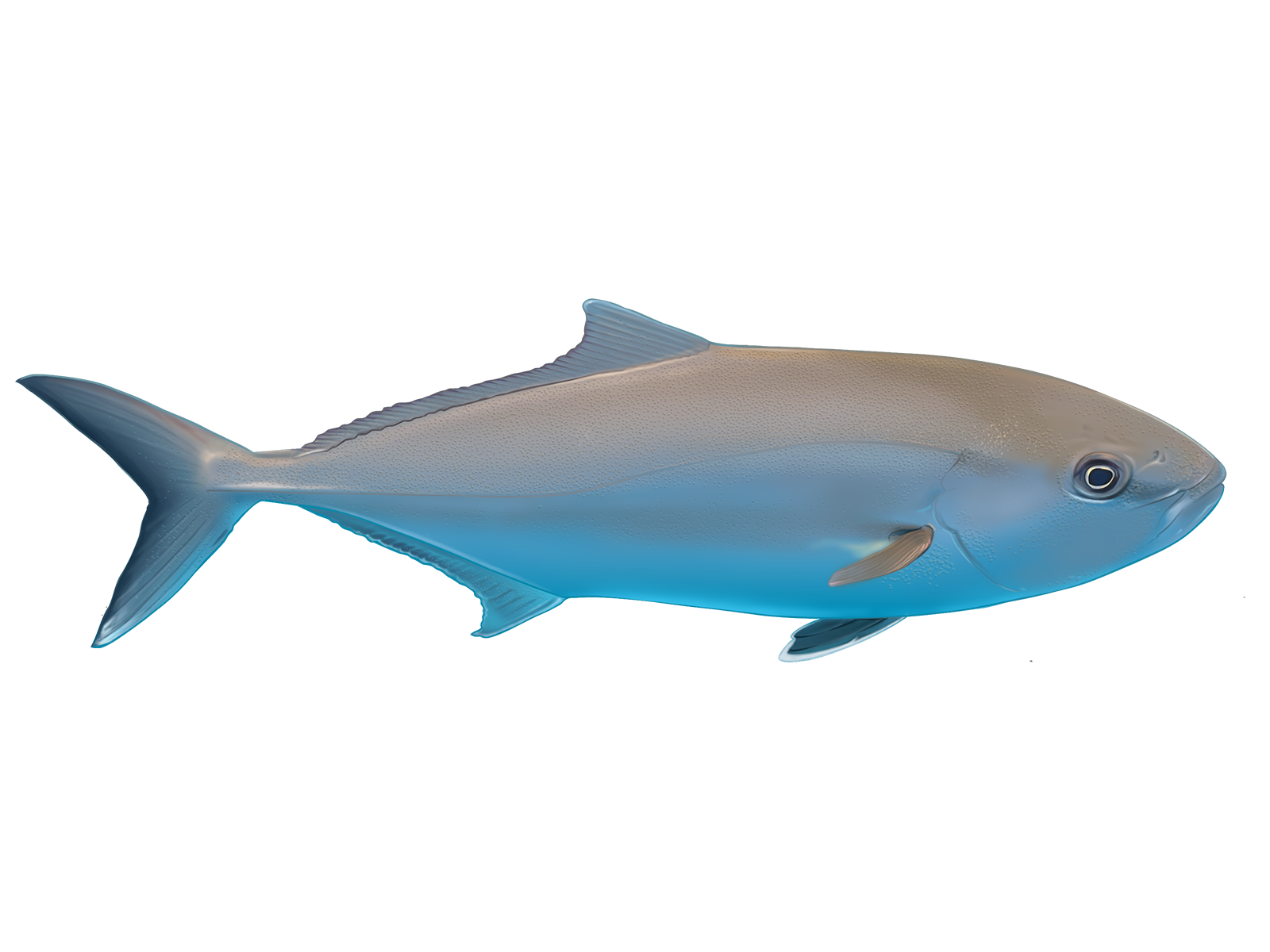 Greater Amberjack
 King Mackerel
 Red Grouper
 Red Snapper
- This shared 8-hour offshore trip gets you into the deeper Gulf waters around Panama City without the cost of a private charter. You'll fish from a 25-foot center console with up to three other anglers, targeting red snapper, grouper, amberjack, mahi mahi, and king mackerel over productive reefs and wrecks. The crew handles all the gear, bait, licenses, and fish cleaning while you focus on the fishing. We use bottom rigs, trolling, jigging, and spinning techniques depending on what's biting. Perfect for families, small groups, or solo anglers who want serious offshore action. Bring your lunch, drinks, and sunscreen
- everything else is covered. Eight hours gives you plenty of time to work different spots and load up on great Gulf fish.
Trip Pricing and Availabilities:
Trip pricing information is temporarily unavailable.
8-Hour Offshore Shared Trip in Panama City
Looking to get out on the Gulf without breaking the bank? This 8-hour shared offshore trip is exactly what you need. Perfect for families, small groups, or solo anglers who want to hit the deeper waters where the big fish live. You'll be fishing alongside up to three other guests aboard a solid 25-foot center console that's built for these Gulf waters. Captain and crew know these reefs and wrecks like the back of their hand, and they're ready to put you on fish from sunrise to mid-afternoon. No need to worry about gear, licenses, or even cleaning your catch – it's all taken care of so you can focus on having a great day on the water.
What to Expect on the Water
Your day starts early when you meet at the marina, usually around dawn when the Gulf is glassy and the fish are hungry. The 25-foot center console gives everyone plenty of room to fish comfortably, and the crew keeps things organized so lines don't get tangled even with four anglers working. You'll spend the day moving between productive spots – some days that means bottom fishing over 80-foot reefs for snapper and grouper, other days you might be trolling the blue water for kings and mahi. The crew reads the conditions and adjusts the game plan accordingly. Expect to cover some serious ground during those eight hours, hitting multiple spots to keep the action going. The boat comes stocked with snacks, water, and ice, plus all the tackle you need. Just bring your lunch, extra drinks, sunscreen, and a good attitude. If you plan on taking fish home, throw a cooler with ice in your car before you leave – the crew will have your catch cleaned and ready to go.
Techniques & Tackle
This trip covers all the bases when it comes to Gulf fishing techniques. Bottom fishing is the bread and butter – you'll be dropping live bait and cut bait down to the reefs where snapper, grouper, and amberjack hang out. The crew sets you up with circle hooks and enough weight to get down in the current, then it's game on. When fish are schooled up, you might switch to jigging with metal lures that flash and flutter on the drop. Trolling comes into play when you're moving between spots or specifically targeting pelagics like mahi and kingfish. The crew runs a spread of lures at different depths and speeds, covering water until something hits. All rods and reels are provided, from heavy bottom rigs to lighter spinning gear depending on what you're targeting. The tackle box is fully stocked with everything from circle hooks to wire leaders, so you're prepared for whatever comes up from the deep.
Top Catches This Season
Red Snapper are the crown jewel of Gulf fishing, and Panama City's offshore waters hold some beauties. These crimson fighters typically range from 5 to 15 pounds, with the occasional 20-pounder that'll make your day. They're structure-oriented fish that love hanging around reefs and wrecks in 60 to 120 feet of water. Peak season runs from June through August, but you can find them year-round if you know where to look. What makes snapper special is their fight – they'll make a strong run for the bottom when hooked, testing your drag and your patience. Plus, they're absolutely delicious on the table.
Gag Grouper are the smart guys of the reef, and catching one always feels like an achievement. These brownish-gray fish with their distinctive patterns can weigh anywhere from 5 to 30 pounds in these waters. They're ambush predators that sit tight to structure, so you need to get your bait right in their face. Spring and fall are prime time for gags when they're more aggressive and feeding heavily. The fight is different from snapper – more bulldog strength than speed, trying to get back to their rocky home. Many anglers consider gag grouper the best-eating fish in the Gulf.
Red Grouper might not get as much attention as their gag cousins, but they're just as fun to catch and even better on the dinner table. These reddish-brown fish typically run 3 to 10 pounds, though bigger ones lurk in deeper water. They're year-round residents that seem less spooky than gags, making them great targets when the bite is tough. Red grouper have a sweet, mild flavor that converts even non-fish eaters.
King Mackerel bring the speed and excitement to Gulf fishing. These silver bullets can stretch the tape from 10 to 40 pounds, and when one hits your trolled bait, you'll know it immediately. The initial run is explosive – kings are built for speed and they'll peel line off your reel in a hurry. Spring and fall migrations bring the best action, but summer fishing can be fantastic when you find the right water temperature. Kings require wire leaders because of their razor-sharp teeth, and they're notorious for spectacular jumps that'll get everyone on the boat excited.
Greater Amberjack are the bulldogs of the offshore world, and they'll test your tackle and your endurance. These powerful fish can push 20 to 60 pounds in Panama City waters, and they fight like fish twice their size. AJs love structure and they're not shy about hitting baits, but once hooked, they'll try every trick to get back to the safety of the reef. The fight is pure power – long, grinding battles that'll leave your arms burning. Spring is prime time for amberjack when they're spawning around the reefs and more aggressive than usual.
Time to Book Your Spot
This shared trip fills up fast, especially during peak season when everyone wants to get offshore. The price point makes it accessible for families and groups who want a full day of Gulf fishing without the cost of a private charter. Remember that 50% deposit to lock in your spot, and keep that 14-day cancellation policy in mind when planning. The crew works hard to put you
Learn more about the species
Gag Grouper
Gag Grouper (Mycteroperca Microlepis) Fish Description
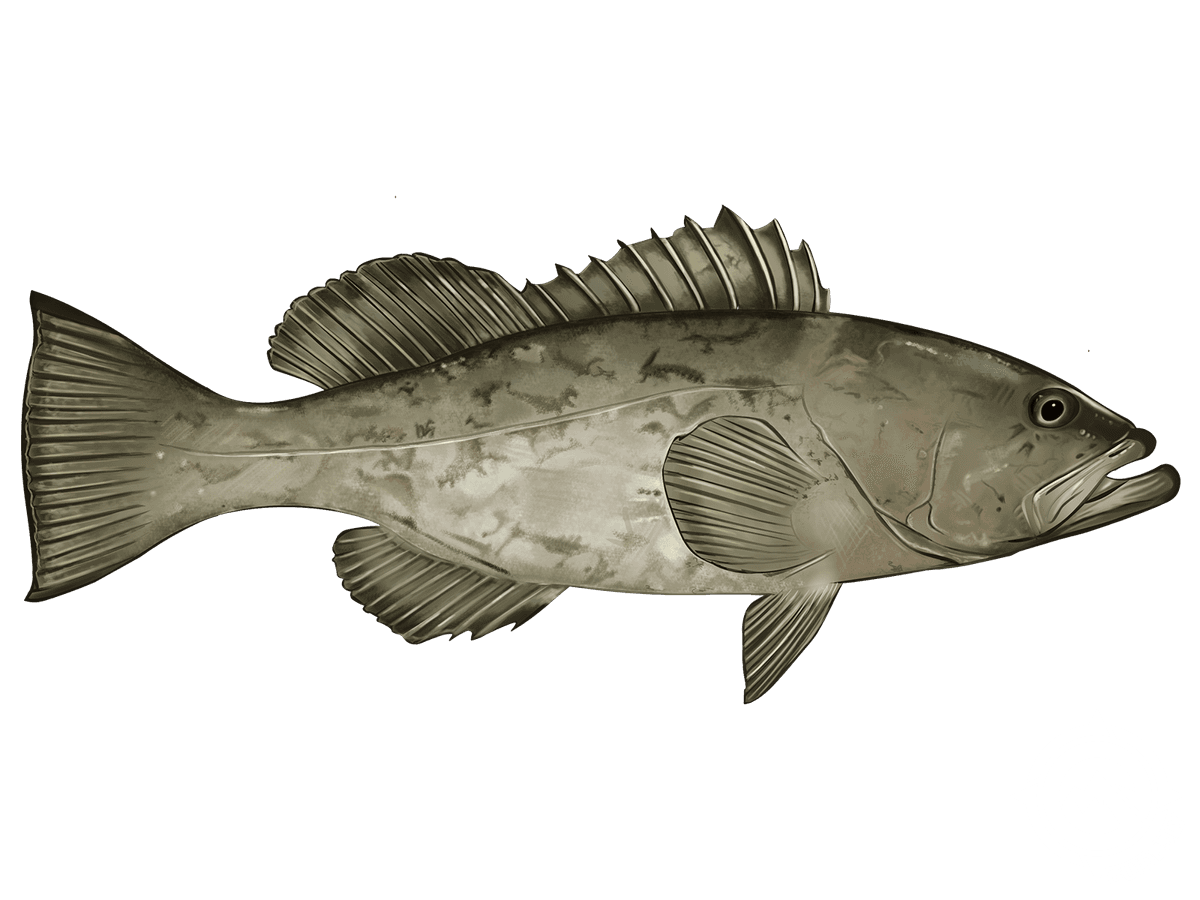
The Gag Grouper appears to be one of the less aesthetically appealing fish among the Groupers. Some even describe the Gag Grouper as “drab” in appearance. Its fins are mostly composed are rays and have a laterally-compressed oblong body. However, it does have a similarity to the Black Grouper: it’s the box-shaped black spots on the back. Their dorsal fins have 11 spines mixed with 16-18 rays while their anal fins have 3 spins with a mix of 10-12 rays.
Female Gag Groupers are normally pale or medium grey in color. Their bodies have a more marbled appearance due to the wavy patterns covering their bodies. But the best way to tell a female and a male apart is through the dorsal fin. Unlike female Gag Groupers, a male Gag Grouper’s dorsal fin is reticulated. Color-wise however, they are also darker than female Gag Groupers. Their bellies and breast are usually dark gray, almost black.
Gag Grouper Diet and Size
Depending on their size, a Gag Grouper’s diet changes. Though, Gag Groupers are seen to prefer a variety of crustaceans such as crab and shrimp. They do like some fish and sometimes, an occasional squid.
An average Gag Grouper is 20 inches (50 cm) long. However, some have reported seeing a Gag Grouper reach 145 cm (57 inches) in length and weigh 36.5 kg (80 lbs).
Interesting Facts about the Gag Grouper
- Gag Groupers, when they mature, change sex from female to male.
- When they’re young, all Gag Groupers start out as females.
- However, Gag Groupers are more commonly female.
- Gag Groupers grow slowly. It usually takes them5-6 years to sexually mature.
- Juvenile Gag Groupers have a different habitat preference to adult Gag Groupers.
- Its scientific name microlepis means small scales in Latin.
- Gag Groupers can live up to 30 years.
- Red Tide can heavily affect Gag Grouper populations.
Gag Grouper – Fishing Techniques: How to Fish for a Gag Grouper
The first thing to look for is a place that can serve as shelter. Gag Groupers like hiding so, they would make use of any structure that can serve as shelter. Young Gag Groupers prefer staying inshore and in shoals until they mature. Older Gag Groupers loiter around offshore reefs and shipwrecks. Usually, when fishing for Gag Groupers, they are usually accompanied by Kingfish and Spanish Mackerel. At times, they’re also accompanied by Blacktip and Spinner Sharks. They’re found chasing herrings that swarm near the beach.
Others advise looking for stone crab traps. Since Gag Groupers love crab, they’ll most likely go to a place where crabs hide.
When it comes to bait choice, Gag Groupers love live bait. They prefer mullet and pinfish. However, some anglers have reported having success with also cut bait like octopus, squid, and crabs. Other options include using Pilchards, Cigar Minnows, and Grunts.
For your equipment, it depends on where you are. In Florida, you’re required to use a circle hook when going bottom fishing. But some say that the standard equipment will do. Standard rod with a 40-pound line works but people have done well even with a 20-30 one. Make sure that your bait is hooked on well but with the barb still sticking out.
When going for the Gag Grouper, be prepared to wrestle with it. Once they snag your bait, they’ll want nothing but to drag their food back to the depths where they came from. They’ll try to run against the rocks to make sure they don’t get fished out. To avoid that, make sure the reel’s locked and don’t let it freewheel otherwise it’ll give them a chance to dive into a hole. To make it easier, some people advise keeping your rod low so it’s easier to just yank them out of the water.
Gag Grouper Habitat and Distribution
Gag Groupers like staying in coastal waters with a lot of rocky structures. Some of their preferred rocky structures include rocky bottoms and reefs. They also like loitering near drop-off walls in the deep waters. But the younger Gag Groupers like staying more in the seabed.
Greater Amberjack
Greater Amberjack (Seriola dumerili) Description
The greater amberjack is a saltwater game fish that can reach 6 feet in length. The fish’s body is a bluish-grey or dark grey color, with a silvery-white stomach. You can also identify this species by the amber stripe in the middle of its body. The dark amber strip on their head extends to its first dorsal fin becomes a darker color when the fish is feeding or excited. It is a slender fish with a pointed head and small eyes.
Interesting Facts
- The Greater Amberjack is a popular recreational game fish in North America because of its size. However, being at the apex of the marine food chain also means that this fish carries a considerable risk of ciguatera poisoning.
- It is greatly prized for its high quality meat and commercial value.
- Currently, it is considered one of the most important species in the commercial production of fish around the Mediterranean, and in North and South America.
Size
This fish grows to 6.2 feet in length and on average reach a weight of 39 pounds. They live up to 17 years, reaching sexual maturity at around 4 to 5 years old. Typically, females grow larger and live longer than their male counterparts.
Fishing Habitat and Distribution
The Greater Amberjack can be found on the eastern coast of the United States in the Atlantic Ocean the Gulf of Mexico to the Caribbean Sea.
Diet and Spawning
The Greater Amberjack primarily feeds on smaller fish and marine invertebrates. Their diet includes squid, crustaceans, sardines, and bigeye scad.
The spawning period is from April to May.
Fishing Technique - How to catch Greater Amberjack
Anglers can use trolling, casting or drifting techniques.
Amberjacks are most often caught aboard boats with heavy rods and reels with lines testing 50 pounds or more. An experienced angler with light tackle can be successful with spinning and baitcasting rigs, and even fly rods. Plugs, spoons, jigs, or even fly streamers and poppers can be used. Both metal jigs or live baitfish are effective in Amberjack fishing since the species is not that picky when it comes to its prey. The best bait with heavy tackle though is live fish.
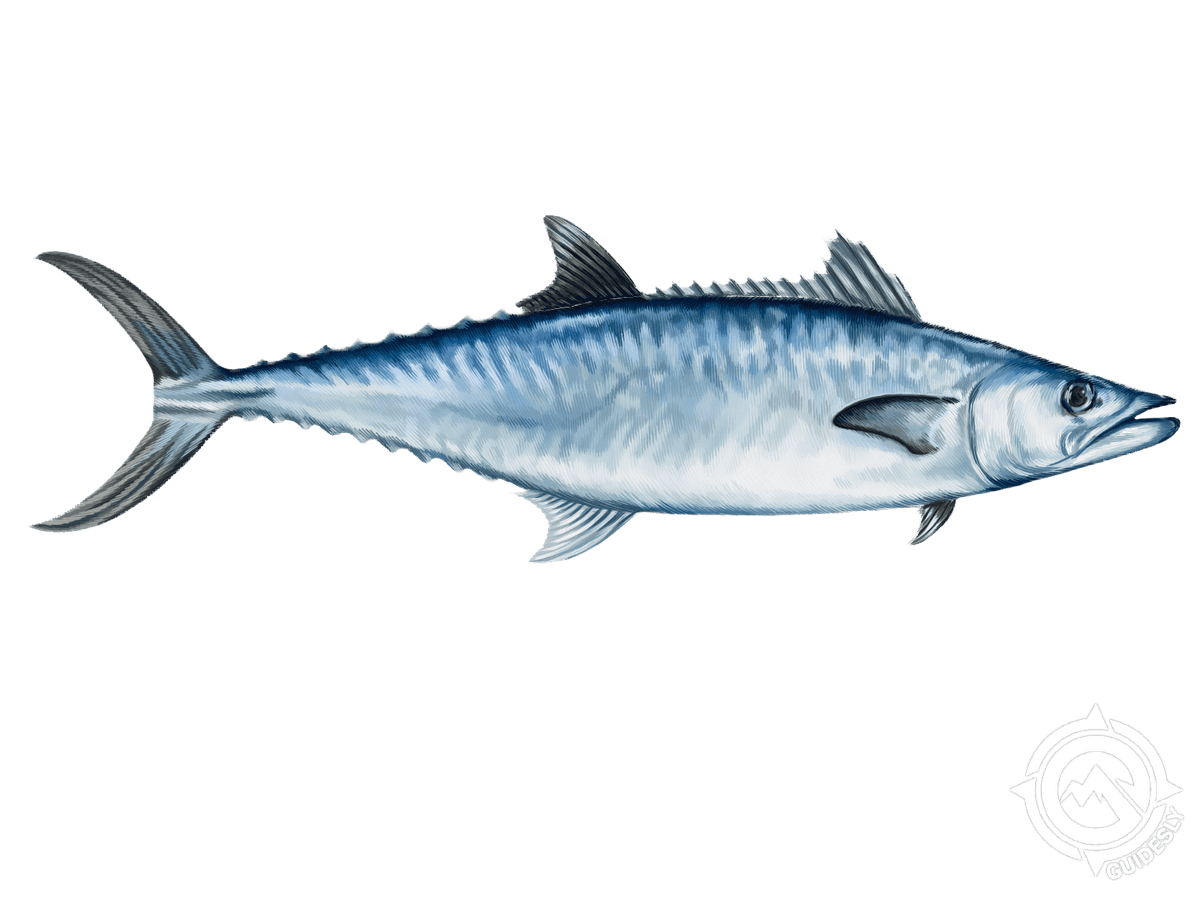
King Mackerel
King Mackerel (Scomberomorus cavalla) Fish Description
Also known as Spanish Mackerel or Kingfish, this migratory species belongs to the mackerel family specifically found in the Gulf of Mexico and the Atlantic Ocean.
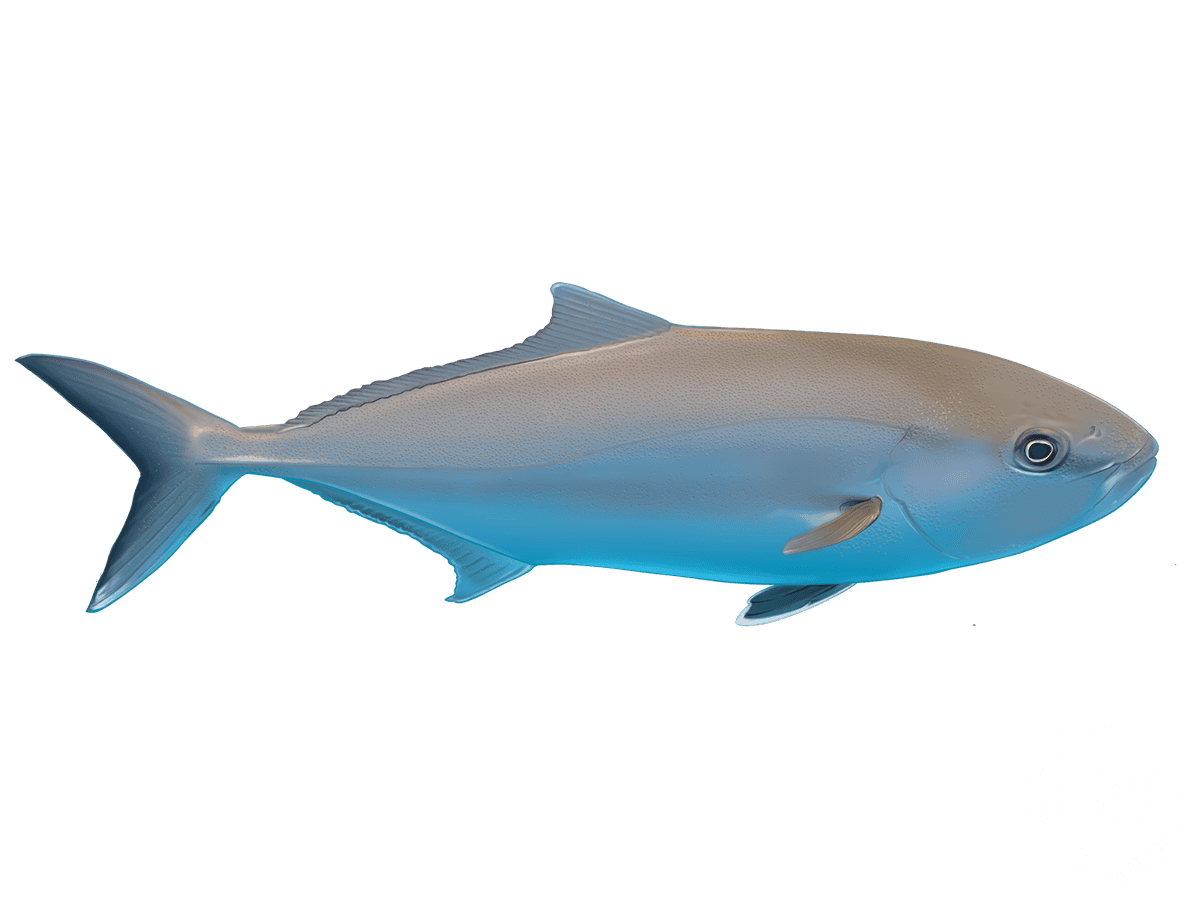
What makes the King Mackerel striking are the small and vaguely visible, loosely attached scales on their entire body. Its dorsal fin is totally without color and usually folded back into a groove (same with the pelvic fins). Generally, King Mackerel are olive in color on the back parts, with a white underbelly, and rosy, iridescent sides. The smaller King Mackerel may have some brown to yellowish spots on the flanks, smaller than that of the Atlantic Mackerel. Interestingly, the teeth of King Mackerel are highly similar to that of the Bluefish.
King Mackerel Diet and Size
As an opportunistic carnivore with a voracious appetite, King Mackerel have several choices on their food menu. Depending on the season, they may feast on Blue Runner, Northern Mackerel, Striped Anchovy, Weakfish, Cutlassfish, Jack, Menhaden, and squid.
This fish is considered of medium size, typically weighing around 30 pounds; some King Mackerel caught weighed a little over 90 pounds. Females weigh more than males. For example, at 7 years old, a female King Mackerel can weigh 22 pounds, whereas the male is only half as heavy.
Interesting Facts About the King Mackerel
- The sperm and eggs of King Mackerel are spread into the sea; they are fertilized by chance.
- Fertilized eggs of King Mackerel hatch in less than a day!
- King Mackerel started being marketed fresh only in 2005. Their grayish flesh has a high fat content.
- Along with Tilefish, Shark, and Swordfish, King Mackerel should be avoided by children and pregnant women due to their high mercury content.
- The King Mackerel is often mistaken for the Atlantic Spanish Mackerel and Cero Mackerel. To distinguish them, know that the last two species’ lateral aliens slope gradually from the gill’s top edge to the tail, whereas the King Mackerel’s stops mid-body.
King Mackerel — Fishing Techniques
King Mackerel belong to the most sought-after gamefish in Texas to North Carolina. They are popular due to their speed which is matched only by the Wahoo, their distant relative.
The most common ways of capturing King Mackerel are by jigging, trolling, and using live or dead bait, spoons, and other artificial lures.
Commercial anglers use gear consisting of run-around gill nets. Recreational anglers typically troll using large planers, heavy tackle, and lures.
If you plan to use live bait, make sure to tie two hooks to a strong metal leader. The first hook (single/treble) must be attached to the live bait’s mouth and/or nose. The second hook (treble) must be put through the bait’s back or allowed to dangle. You must do these because King Mackerel are known to bite the rear section of a live bait.
King Mackerel Habitat and Distribution
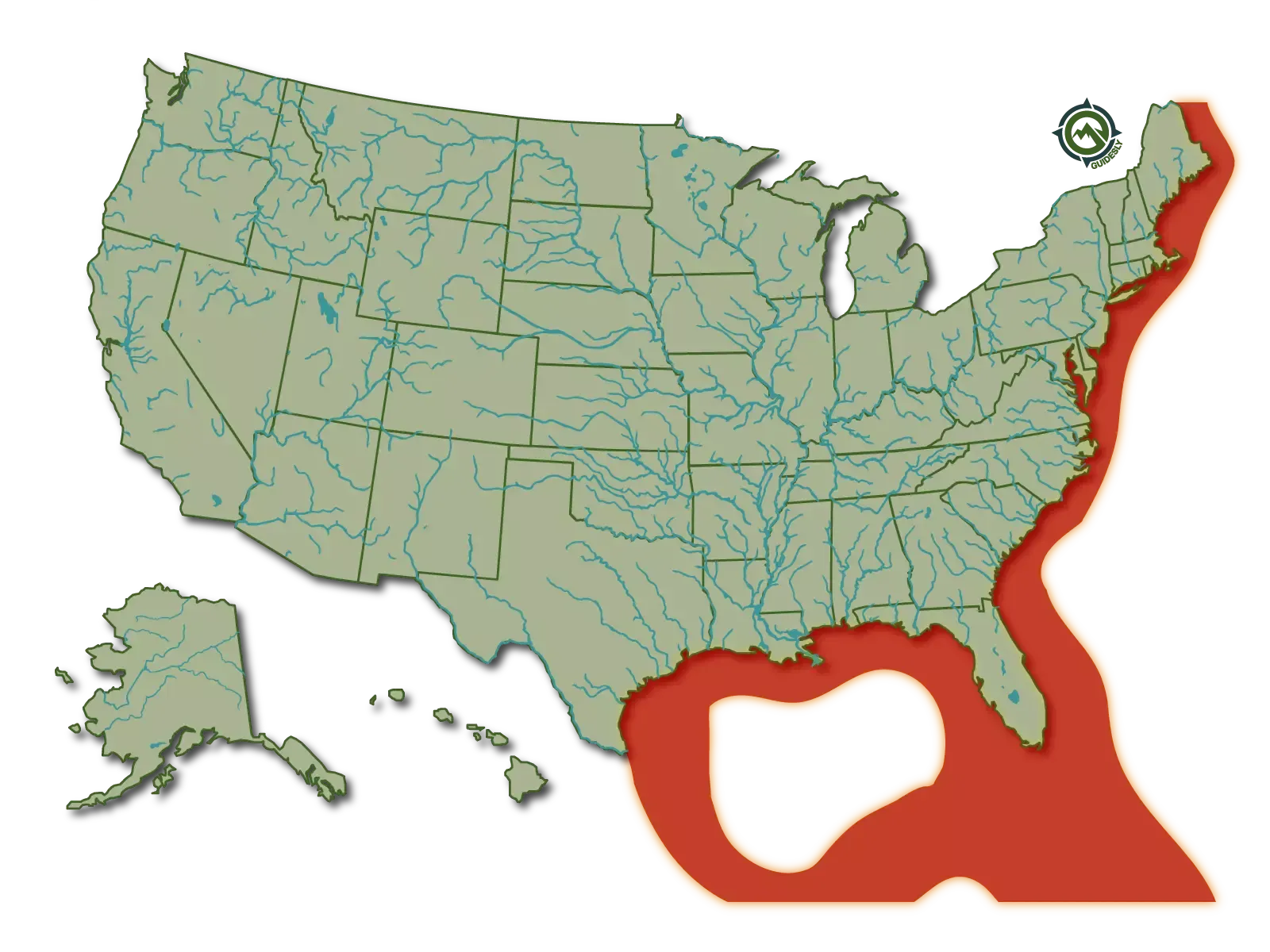
As a subtropical fish, King Mackerel are found mainly in the Atlantic Coast along the US. They are highly abundant in Brazil, especially Rio de Janeiro, and are also found in North Carolina. This fish also inhabits the Gulf of Mexico, the Gulf of Maine, the Bay of Bengal, and the Indian Ocean and Arabian Sea.
King Mackerel are commonly found in depths ranging from 40 feet to 150 feet. The bigger King Mackerel are usually found inshore, particularly in harbors and inlets with waters as deep as 590 feet. They occur in waters with temperatures in the range of 68 to 84°F.
Red Grouper
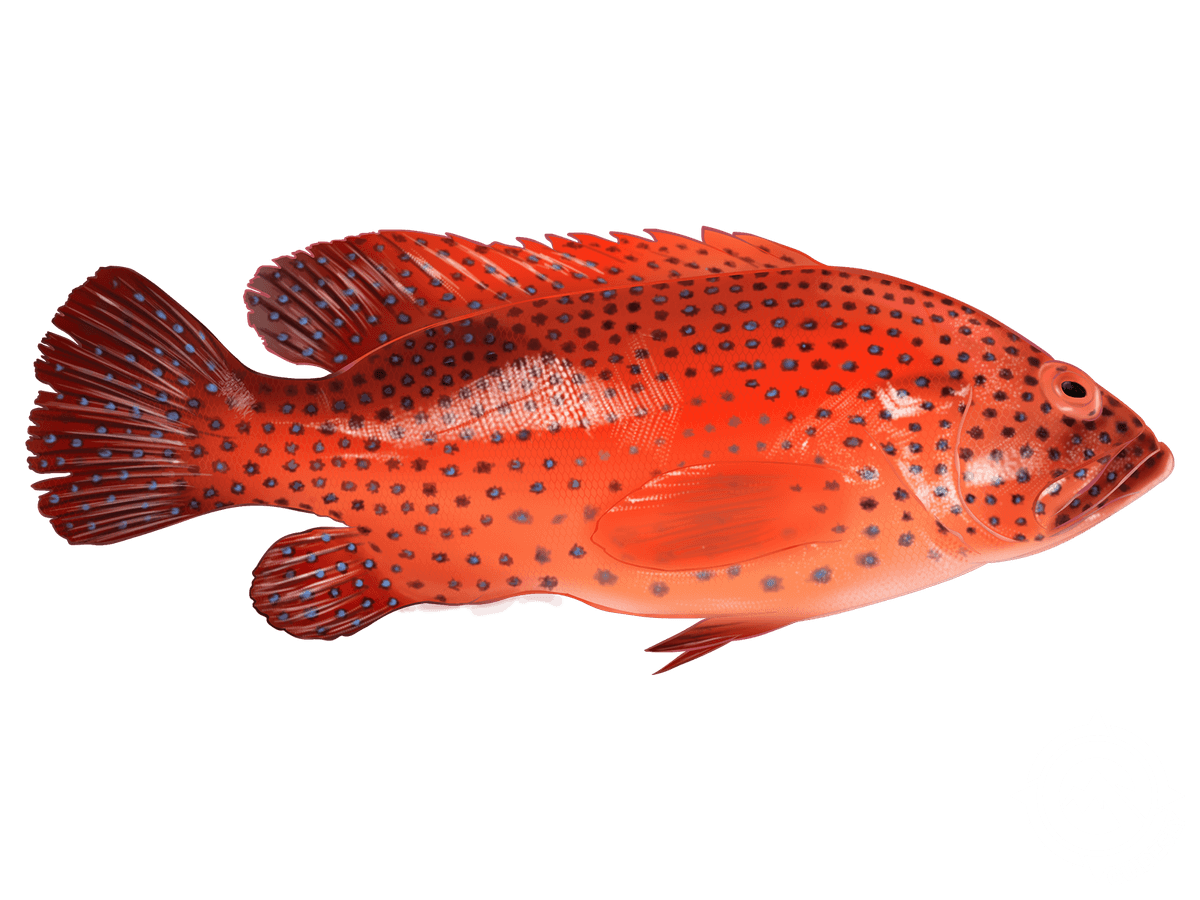
Red Grouper (Epinephelus morio) Fish Description
As the name suggests, the Red Grouper (Epinephelus morio) can easily be distinguished from other groupers by the mostly rusty red coloration of its body. While its head and upper parts tend to be darker, the color gradually lightens until it reaches the rather light red to pinkish hue of the belly. It also has some sort of blotches on its side and some distinctive white spots on its body—from the head right across to the base of its tail. And although the fins sometimes have the same coloration as its body, they usually have some sort of a black margin that runs right around the edges.
The body of the Red Grouper is known to be robust and meaty even though it’s mostly moderate in size. It has a large mouth which allows them to eat its prey whole. Its lower jaw protrudes a little bit beyond the upper jaw, both of which are equipped with several sets of razor sharp teeth that the fish uses to prevent its prey from escaping, not to rip its flesh apart. Its prey mostly consists of marine invertebrates including octopi, shrimps, and crabs, but from time to time will also eat smaller fishes.
The Red Grouper is a protogynous hermaphrodite fish. This means that all of them are females at the very beginning of their life. Many would, however, change to males as soon as they hit their sexual maturity, which is between seven and fourteen years of age. When the spawning season comes which usually occurs between January and April, both the males and the females would release their sperms and eggs in the water. The fertilized eggs would just drift with the currents until they hatch into larvae in about thirty hours. The larvae would just then live among the zooplanktons near the surface of the water. As they reach their juvenile stage, they would swim down to the bottom of the water and settle within seagrass beds where they would prey on smaller fishers and different marine invertebrates until they reach their full maturity.
Interesting Facts About Red Groupers
- The Red Grouper can grow up to four feet long and can weigh around a little more than fifty pounds.
- The biggest Red Grouper caught on record was a forty-two pounder caught off the coast of St. Augustine, Florida in 1997.
- Red Groupers have long lifespans with some reaching up to twenty-nine years of age.
- It is a protogynous hermaphrodite, which means they are all born females.
- Many would change to male as they hit sexual maturity.
- About 70% of groupers harvested in U.S. waters are Red Groupers.
- Its meat is highly regarded for its moist, firm, and flaky consistency.
- It is said to be one of the best tasting groupers because of its shellfish-like taste.
- Red Grouper meat is sold either fresh or frozen as a whole a fish, as steaks, or filleted.
- Red Grouper meat is susceptible to red tide due to its shellfish diet.
- Red Groupers are known to be one of the top predators in reefs, making them an essential part of the reef’s ecological balance.
- Red Groupers are often preyed upon by other known reef apex predators, including barracudas, moray eels, and different species of sharks.
- They are targeted by both commercial and recreational fishers.
- Although their population status hasn’t reached the “critical” levels yet, there were recorded declines in their populations in some parts of the Gulf of Mexico due to overfishing.
- Another reason for the decline is the huge number of juveniles that are accidentally caught by shrimp trawlers.
- Catch limitations for commercial and recreational fishers are placed by the authorities to help with the fish species’ population recovery.
- Commercial and recreational fishing seasons are also closed from January to April—the Red Grouper’s spawning season.
Red Grouper Average Size and Swimming Speed
Although there were some reported sightings of a Red Grouper reaching a whopping fifty pounds in weight, average weights tend to be a lot smaller of about five to ten pounds. Most also don’t grow too long as average length rarely hits the two feet mark. As for the speed, Red Groupers don’t swim that fast although they can swim much faster in short bursts to help them escape predators.
Red Grouper Habitat and Distribution
The Red Grouper is not a migratory fish and can often be found near our eastern seaboard—from as far north as Massachusetts down to Florida and into the Gulf of Mexico. It can also be found abroad as far south as the Caribbean Sea up to southern Brazil.
This fish primarily prefers muddy and rocky bottom underwater habitats at depths of 16 to 1,083 feet. It can also be seen swimming or resting close inshore, especially in reefs, ledges, and wrecks of up to 300 deep, with many anglers catching these tasty fish in about 10 to 100 feet.
Red Grouper Fishing Tips
Although you can pretty much catch a Red Grouper using a light tackle, you better be ready for a somewhat long battle with this fish as it’s known to be one of the toughest fighters out there. Hooking one wouldn’t be much of a problem as it’s a pretty aggressive predator that is always ready to strike on every opportunity of a meal, especially if you use its favorite diet as baits such as shrimp and crab.
Red Snapper
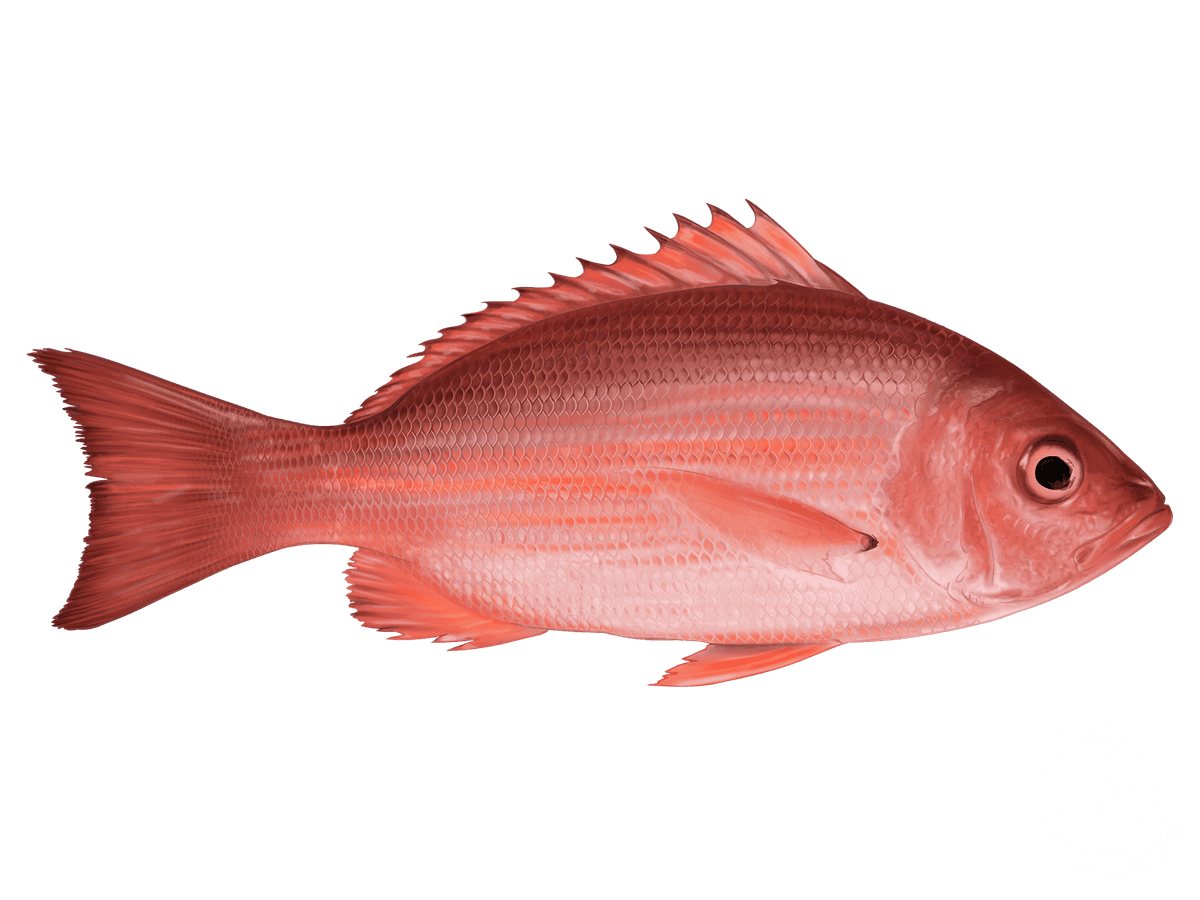
Red Snapper (Lutjanus campechanus)
Fish Description
Red Snapper can grow very large. They are pink to light red in color when they are young, and as they mature they turn red over most of their body. The lower area of their body is pale-white in color.
They are popular with recreational fishermen as well as commercial seafood markets and restaurants. Snappers are bottom dwellers that are a trophy catch for anglers.

Habitat and Distribution
The Red Snapper is commonly found on the Atlantic coast of the US and the Gulf of Mexico. They like water temperatures of 50-70 degrees. Juveniles are found inshore and muddy bottoms. Adult snappers are found mainly near structure in deep water.

Red snapper is commonly found at the depth of 30 - 620 feet in the Gulf of Mexico and down the eastern coast of the US.
Size
Red snapper can grow to 3 feet and weigh 35 pounds or more, but the average size caught is 1-2 feet long and weighs less than 10 pounds. The world record is 50 lbs 4 oz. the monster was caught off Louisiana water in 1966. Their lifespan is more than 20 years.
Spawning
Larger, matured Red Snapper produces more eggs than the young ones. A 24-inch female snapper (about 8 years) produces a large number of eggs as 212 17-inch females (about 5 years), most of the red snapper caught in the Gulf today is around 4-6 years old.
Fertilized eggs drift to the surface and hatch in about one day. After just a month, the young fish settle out of the water column in shallow water, and as they grow older they move to a regulated habitat where they will mature and eventually move to the deeper Gulf waters of the bay. The spawning season is between May and October.
The females lay eggs in rocky and shallow regions or on coral reefs. Generally, the eggs hatch within a day, and the young one settles out of the water column in shallow waters.
Fishing Techniques - How to Catch Red Snapper
Red Snapper can be caught using rigs, manual reels, handline, and electric reels, all dressed with heavyweights and multiple hooks. Lure with cigar minnows or fresh squid; pigfish or live pinfish will land the biggest snapper. Other effective bait is octopus, live squid, and shrimp, followed by small natural baitfish in the area. Keep in mind that you need to take the baits down the bottom to where the Red Snapper settles. When fishing Red Snapper, don’t forget that they are true warriors They will give you a real fight when hooked. They will often run to cover or near debris, which can be entangled or even cut your line.
Snappers can also be caught fly fishing. Some anglers like to work chum in the snapper area and then fly fish to rising fish. But if snapper is near the surface, fly fishing is a great and exciting technique. Rig setup is an 11 - 13-weight fly line tipped with Clouser minnows and deceivers. The key is presenting the fly to the snapper naturally. As the fly floats back toward the snapper, strip the line as you would normally retrieve the fly. The snapper will attack the moving fly.
Red Snapper Good to Eat?
Absolutely! Red Snapper is a fish that has a mild and nutty taste. It is delicious and a very popular fish for at home and in restaurants. It is considered one of the most in-demand fish. To really experience the true essence of Red Snapper's taste, it is important to cook it with minimal seasoning. A light seasoning of salt and pepper and a squeeze of lemon juice is enough to enhance its natural flavor. Whether baked or pan-fried, this fish tastes delicious when cooked in a straightforward manner. Its taste is one of the main reasons why Red Snapper is such a popular dish among seafood enthusiasts. The next time you eat Red Snapper, try to savor its unique taste by keeping the seasoning simple.
This tasty fish will not only satisfies your taste buds but also provides numerous health benefits. From improving heart health to aiding in weight loss, red snapper is full of essential nutrients that can have a positive impact on your overall well-being.
Health Benefits of Red Snapper
Red Snapper is a highly satisfying seafood that is not only an absolute delight to taste buds, but also a rich source of Omega-3 fatty acids. These fatty acids are essential for maintaining a healthy body and mind. In addition, Red Snapper is low in calories, high in protein, and low in saturated fats, making it an excellent choice for those who wish to maintain a healthy diet. It is rich in vitamins B12 and D, iron, and potassium, all of which are essential nutrients for a healthy life. As a result, consuming Red Snapper offers numerous health benefits, including reducing the risk of heart disease, improving brain function and memory, boosting the immune system, and promoting healthy skin and hair. When it comes to choosing a delicious and healthy seafood option, Red Snapper is undoubtedly an excellent choice.
About the Pisces Fishing & Adventures
%2F%2Fusers%2F73606e98-6309-402d-a1f2-4944382da1c5%2Fvehicle_picture%2Fthumbnail_img_3201-mhjdam9e.jpg&w=1200&q=75)
Vehicle Guest Capacity: 5
Manufacturer Name: Suzuki
Maximum Cruising Speed: 30
Number of Engines: 2
Horsepower per Engine: 150